
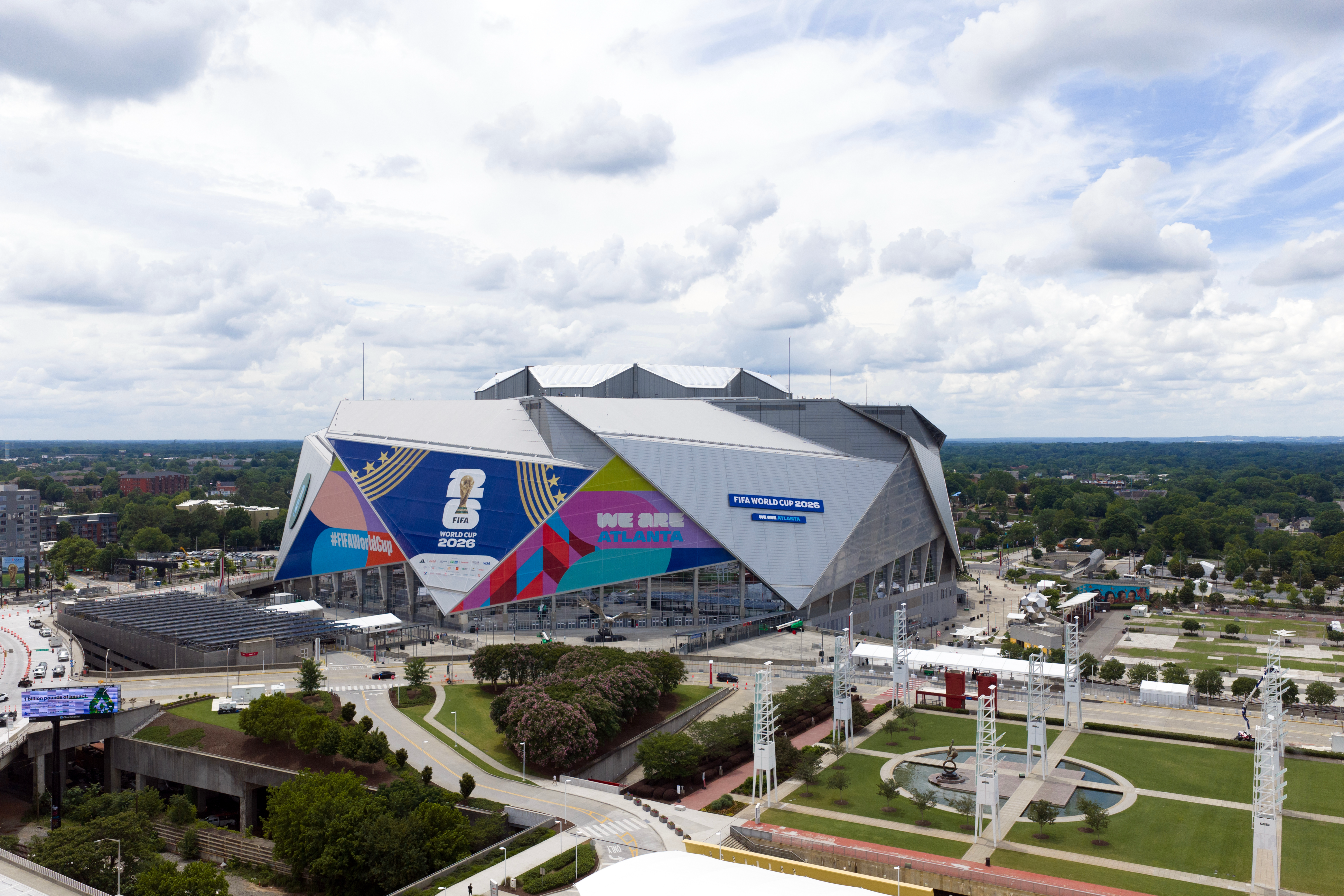
Atlanta already has global credibility, so the real question surrounding the 2026 FIFA World Cup is not exposure but lasting impact. Georgia Tech experts warn that big economic projections often obscure who actually benefits, with much of the revenue likely flowing to large corporations and FIFA rather than local businesses and residents. Transportation infrastructure will face significant strain, and whether World Cup investments produce permanent improvements or simply support a few weeks of activity remains uncertain. One bright spot is a Georgia Tech partnership with Second Helpings Atlanta to build food rescue systems that could outlast the tournament and serve the city for years to come.
The four things to know:
- It’s not about exposure anymore. Atlanta is already a global city, so the focus is on whether the World Cup delivers lasting value for residents.
- Economic impact is uneven. Big headline numbers do not show who actually benefits, and much of the spending may not reach local communities.
- Infrastructure will be tested. Transportation and downtown systems will face heavy strain, raising concerns about what improvements last beyond the event.
- The hidden story is food and logistics. Behind the scenes, Georgia Tech researchers are working to reduce food waste and strengthen systems that could outlast the tournament.
See a curated list of Georgia Tech experts available to comment on the World Cup here.
A Global Stage and Familiar Promises
As Atlanta welcomes the world for the 2026 FIFA World Cup, the promises are familiar: millions of visitors, global attention, economic growth, and a chance to showcase the city on one of the biggest stages in sports.
But Georgia Tech experts say the real question is not whether the tournament will generate activity — it is who benefits from it and what remains after the final match is played.
From Visibility to Value
Mega-events have long been sold as catalysts for transformation. The 1996 Olympics reshaped Atlanta’s physical landscape and helped position the city as a global destination. Thirty years later, the World Cup arrives at a very different moment.
“There are similarities,” said Emily Barrett, assistant professor in the School of City and Regional Planning. “Like the Olympics, the World Cup is an accelerator for infrastructure upgrades and public and private investment alike.”
Atlanta is seeing significant public investment in transportation improvements and billions of dollars in private development downtown. But today’s Atlanta is very different from Atlanta in the 1990s.
“Atlanta is no longer a city seeking recognition on the world stage,” Barrett said. “We are a thriving and growing city.”
That shifts the conversation from visibility to value.
“The open question is whether hosting mega-events makes the city work better for the people who live here,” Barrett added.
The Economics Behind the Headlines
Assessing that value becomes more complicated when economic forecasts enter the conversation.
Large projections often dominate headlines, but Declan Abernethy, lecturer in the School of History and Sociology, cautions that economic impact estimates rarely tell the whole story.
“It is far easier to put out an economic impact projection compared to the difficulty of measuring impact,” Abernethy said.
While visitors will spend money on hotels, restaurants, transportation, and entertainment, he notes that much of that spending may not reach the community.
“When we look closely at that spending, we can see that much of the profit will be taken in by large corporations or FIFA in the immediate vicinity of Mercedes-Benz Stadium and not as much by Atlanta residents or small businesses,” he said.
According to Barrett, economic studies often overlook a critical question: What could alternative investments have accomplished?
“Economic studies rarely account for displacement costs, or whether the same public dollars could have generated similar or better outcomes if invested elsewhere,” she said.
Pressure Points Across the City
The World Cup’s impact extends beyond economics; it will also test Atlanta’s infrastructure at a scale few events can match.
Michael Hunter, professor in the School of Civil and Environmental Engineering, says the biggest challenge may be the volume of people moving through the city.
“There will be a number of pressure points. However, one of the most significant will be just the number of people,” Hunter said. “This event will attract significant crowds.”
Atlanta’s transportation agencies have spent years preparing, drawing on lessons learned from events including the Super Bowl, World Series, and major concerts. Still, capacity limits are unavoidable.
“There is only so much traffic that MARTA or any transit agency can handle,” Hunter said. “People need to understand that there will be congestion and longer wait times. The key is to be patient.”
The concern is whether those investments result in lasting improvements or merely support a few weeks of activity.
Abernethy argues that the World Cup should be viewed as part of a broader vision for Atlanta rather than a standalone catalyst.
“We are seeing the World Cup as a part of a longer-running and more cohesive vision for sport and economic development downtown,” he said. “Atlanta may not be repeating the same cycle nor cracking downtown’s development problem with the World Cup itself.”
Behind the Scenes: Food and Logistics
Infrastructure challenges extend beyond transportation. Feeding hundreds of thousands of visitors while minimizing waste requires its own network of logistics, coordination, and planning.
Nicole Kennard, a research scientist at Georgia Tech’s Brook Byers Institute for Sustainable Systems, views the tournament as an opportunity to strengthen how food moves throughout the city.
“These large events are a really big opportunity for us to coordinate and test our infrastructure,” Kennard said. “We have to think critically about how to improve the infrastructure and ensure its resilience and efficiency.”
Working with organizations such as Second Helpings Atlanta, the official food rescue partner for the World Cup, Georgia Tech researchers are building technologies and tools to improve coordination among food rescue groups. The effort aims to keep surplus food out of landfills by quickly moving it from stadiums and vendors to local food organizations.
“It’s really a logistics problem, a data problem, and a coordination problem,” Kennard said. “The faster you can move food from the point of surplus directly to a pantry, the more likely it is to reach people who need it.”
What Legacy Looks Like
Ultimately, Atlanta’s World Cup legacy may not be measured by attendance figures or visitor spending alone.
“How we evaluate success depends on what we choose to measure, and too often we focus on headline numbers instead of who actually benefits,” said Abernethy.
Kennard sees the tournament as a chance to build systems that outlast the event itself. “What we build for the World Cup could become critical infrastructure for future emergencies and disasters,” she said.
Atlanta already knows how to host a global event. Whether the investments, partnerships, and infrastructure created for the World Cup leave the city stronger after the crowds leave remains to be seen.