
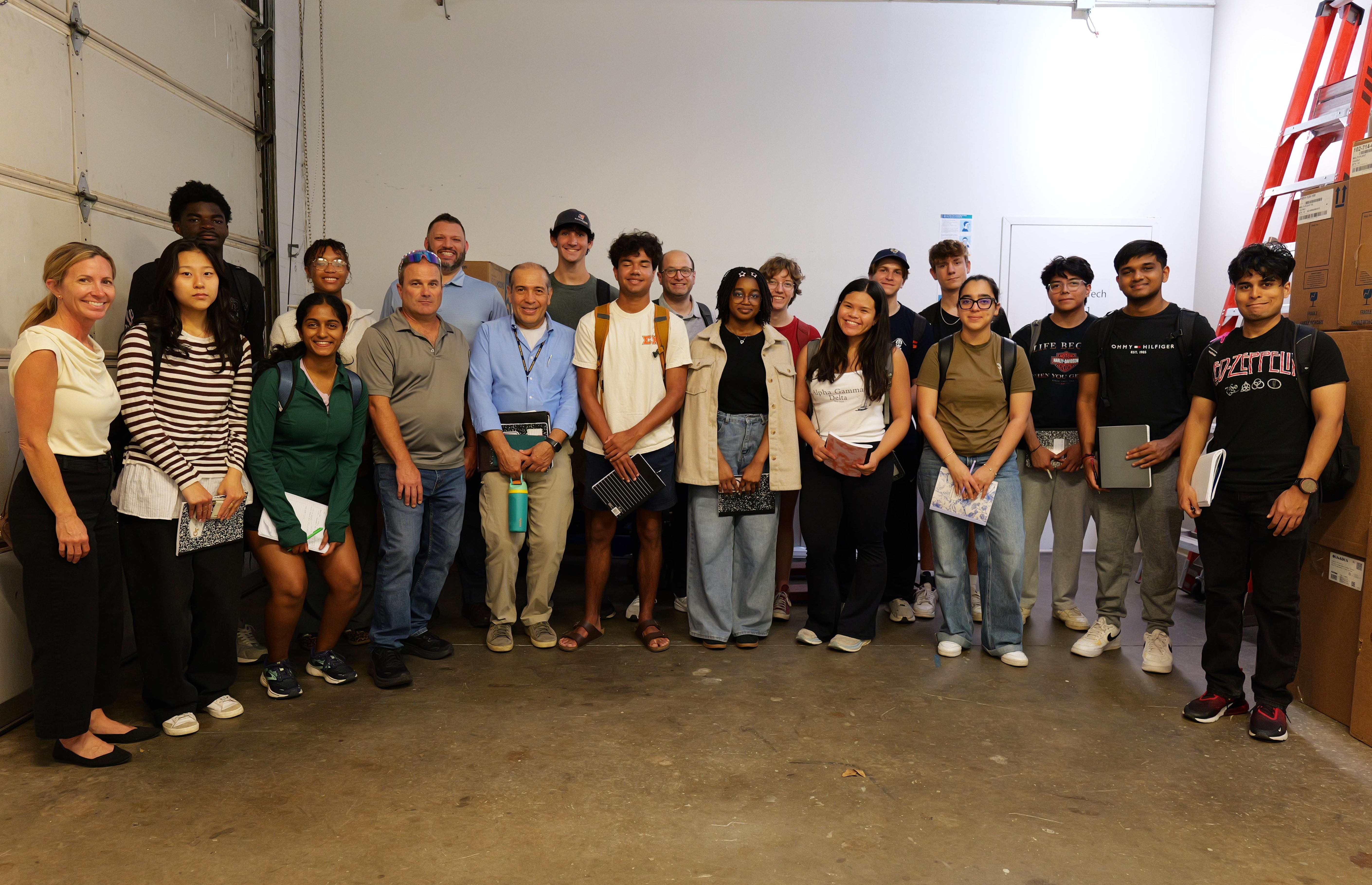
Student participants in the Energy Solutions VIP course.
Students are shaping how campus uses energy by participating in a hands-on, project-based course.
Georgia Tech students are playing a direct role in shaping the Institute’s energy future thanks to a unique hands‑on opportunity offered through the Georgia Tech Energy Solutions Vertically Integrated Project (VIP) course. In the fall, the class stepped out of the traditional classroom and into the mechanical rooms, rooftops, and hallways of campus buildings to conduct real energy audits — work that will help guide actual decisions about future building upgrades and operational improvements.
Led by Jennifer Chirico, associate vice president of Sustainability, and Jairo Garcia, resilience specialist in the Office of Sustainability, the course gives students not only technical training, but also meaningful influence over how campus energy systems evolve as well as a greater understanding of campus infrastructure systems.
“Our students are incredibly capable, and this course shows just how much they can contribute when given the opportunity. Their recommendations actively support Georgia Tech’s long-term sustainability goals and help drive real change in improving our campus energy performance,” Chirico said.
After learning the fundamentals of building energy use and audit methodology in class, students partnered with Building Managers Eric Denison and Ross Bongiovi for an interactive walkthrough of four buildings on Marietta Street. The tour introduced them to the technologies behind campus operations, from HVAC controls to lighting systems, and demonstrated how real‑world building conditions affect energy performance.
Students then performed deeper assessments of each building, focusing on core areas such as:
- Heating and cooling systems (HVAC).
- Lighting technologies.
- Water usage and plumbing fixtures.
- Construction design and building envelope performance.
These observations formed the basis for recommendations aimed at improving efficiency, reducing emissions, and lowering operating costs.
During the walkthrough, students identified actionable opportunities for campus energy savings, including:
- Transitioning fluorescent bulbs to LED lighting.
- Electrifying gas‑powered space heaters.
- Installing motion sensors for sinks.
- Reducing energy loss from building envelope leakage.
- Improving HVAC zoning.
- Considering renovation strategy and construction approach.
- Using building standards like LEED to guide upgrades.
Their findings reflect classroom learning and fresh perspectives that building managers and sustainability staff value in long‑term planning efforts.
The experience sparked inspiration and awareness among participating students. “It was interesting to see the different HVAC systems and the temperatures they are constantly maintaining. I didn’t think about how these systems are always going even when we aren’t in the building,” said electrical engineering student Noah Mitchell.
“Joining the VIP allowed me to see the behind‑the‑scenes steps of building maintenance, which added a human component to how campus operations work,” environmental engineering student Calina Leavy said.
These perspectives show how the course deepens students’ understanding of the systems that power campus — and empowers them to help shape improvements.
After the on‑site assessments, students conducted full ASHRAE (American Society of Heating, Refrigerating, and Air-Conditioning Engineers) Level 1 energy audits on each building and presented their findings at the end of the semester.
These reports are now supporting campus planning for:
- Future building upgrades.
- Energy efficiency strategies.
- Cost‑saving opportunities.
- Long‑term return on investment (ROI) calculations.
Shivangi Ranjan and Calina Levy, both second year students, will present their work during this week's Sustainable Development Goals calendar of events on Thursday from 1 – 1:30 p.m. at the Kendeda Building For Sustainable Design, Room 118. Virtual attendance is available. For these students, their work doesn’t end in the classroom. Their recommendations are helping to guide real institutional decisions.
The Energy Solutions VIP course demonstrates the power of experiential learning: Students gain industry‑relevant skills while directly influencing how Georgia Tech advances its sustainability goals.